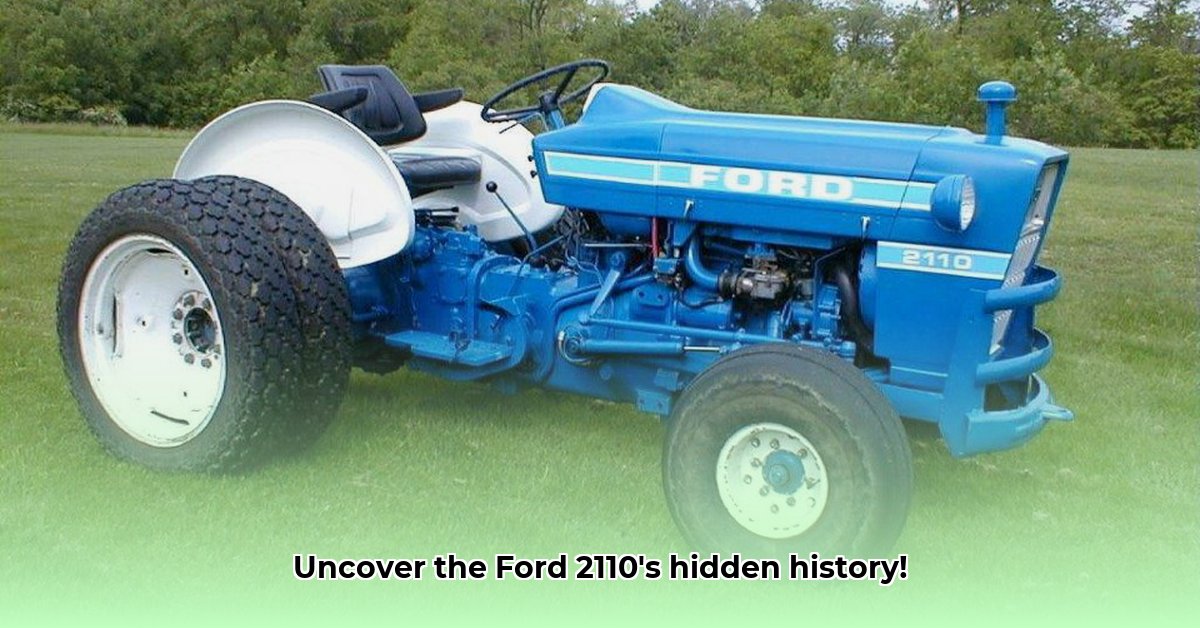
Ford 2110 Tractor: A Collector's Deep Dive
The Ford 2110, a compact utility tractor produced from 1983 to 1987, holds a special place in the hearts of vintage machinery enthusiasts. Manufactured by Shibaura Manufacturing Company for Ford, this machine represents a robust workhorse from a bygone era of farming. This comprehensive guide delves into the Ford 2110's history, specifications, maintenance needs, and ownership considerations, providing valuable insight for potential collectors and those seeking a deeper understanding of this iconic tractor. Did you know that the precise specifications can vary slightly depending on the model year and region? This article will address these inconsistencies. For more information on Ford tractor keys, check out this helpful resource: Ford Tractor Keys.
Decoding the Ford 2110: Specifications and History
One of the challenges in researching the Ford 2110 is the variation in reported specifications across different sources. This article aims to consolidate the most commonly cited features while acknowledging these discrepancies. Remember to always verify specifications for the specific tractor you are considering.
A Glimpse into History: The Ford 2110 emerged during a time of significant advancements in agricultural technology. Its compact design catered to smaller farms and hobbyists, offering a level of versatility not found in larger, more cumbersome machines.
| Specification | Description | Notes |
|---|---|---|
| Manufacturer | Ford (built by Shibaura Manufacturing Company) | Shibaura's involvement is crucial for parts sourcing and understanding the tractor's lineage. |
| Engine | Shibaura diesel (exact model varies) | Engine model significantly impacts parts availability. Consult your model's manual for specifics. |
| Horsepower | Approximately 21 horsepower | Horsepower may vary based on engine model and condition. |
| Transmission | Typically 12 speeds (forward and reverse) | Variations exist; consult your specific model for confirmation. |
| Drive Type | 2-wheel drive (2WD) or 4-wheel drive (4WD) | Drive type significantly impacts capabilities and terrain suitability. |
| 3-Point Hitch | Category I | Crucial for attaching various implements. |
| PTO | Rear-mounted | Power Take-Off for powered implements. |
| Hydraulic System | Live hydraulic system | Powers implements attached to the three-point hitch. |
The Ford 2110 in Action: Capabilities and Limitations
The Ford 2110 excels in various tasks suitable for its size and horsepower. It's ideal for small-scale farming, landscaping, and light-duty agricultural work. Its maneuverability is a key advantage in confined spaces. However, its limitations are equally important to consider. It’s not suited for large-scale commercial farming, and its relatively low horsepower restricts the types and size of implements it can effectively handle. Common attachments included plows, cultivators, mowers, and even snow plows. Have you ever considered the versatility offered by adapting this tractor to different seasonal needs?
Maintenance and Parts Availability: A Collector's Challenge
Maintaining a Ford 2110 requires proactive attention and a strategic approach to parts sourcing. While its mechanical simplicity makes some repairs manageable, obtaining replacement parts can be a significant undertaking.
Key Maintenance Strategies:
- Regular Maintenance Schedule: Preventative maintenance is paramount. Regular oil changes, filter replacements, and careful inspections extend the life of your tractor.
- Parts Sourcing: Network with other Ford 2110 owners, utilize online forums, and contact specialist vintage tractor parts suppliers. Salvage yards can also be a valuable resource. "Patience is key when searching for parts," says John Miller, a restoration expert with over 30 years of experience.
- Record Keeping: Maintain meticulous records of all maintenance and repairs performed. This proves invaluable for future troubleshooting and repairs.
Ownership Considerations: Before You Buy
Purchasing a Ford 2110 demands careful consideration. A thorough pre-purchase inspection is crucial.
Essential Pre-purchase Steps:
- Complete Inspection: Examine the tractor meticulously, checking all mechanical, hydraulic, and electrical systems. Look for indications of damage, rust, or previous repairs.
- Test Drive: Run the tractor through its paces; listen for unusual sounds and check the functionality of all systems.
- Documentation Review: Obtain any available service records or documentation; its maintenance history strongly correlates to its longevity.
- Budgeting: Factor in the costs of potential repairs, maintenance, and parts acquisition. Costs can be deceiving and require realistic planning.
Conclusion: The Enduring Allure of a Vintage Ford 2110
Despite its age and the challenges associated with maintenance and parts, the Ford 2110 retains a strong appeal for collectors. Its blend of compact size, durability, and historical significance makes it a desirable investment for enthusiasts. While not without its limitations, the Ford 2110 offers a unique connection to a past era of agricultural machinery. For those willing to dedicate the time and resources, owning and restoring a Ford 2110 provides a uniquely rewarding experience.